Buy the Books You’ll Reread. Borrow the Rest.

Somewhere in your house there is a pile of books you have not read. Most of us have one. The Japanese have a word for it, tsundoku, which is a far kinder word than the situation deserves.
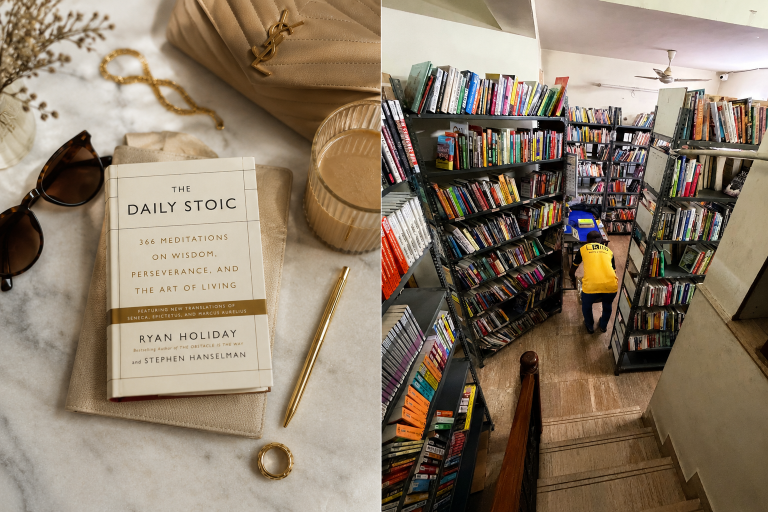
Look at the pile properly. Every book in it was bought by an optimist. Someone saw a cover, read half a review, took a colleague’s recommendation, or picked it up at an airport bookshop before a flight, and made a decision about a book they had not read a single page of.
Buying is a bet placed before the evidence arrives. Sometimes it pays. Often it does not, and the real cost is not the money.
Price makes you a narrower reader
Set borrowing against buying and the argument lands on price, which is the least interesting thing about either. What ownership actually costs you is range.
Price sets behaviour. When a book costs six or seven hundred rupees, you get careful. You buy what you are already confident about: the title everyone has mentioned, the author you have read before, the subject you already work in. Confidence narrows range, and range is the thing that makes a reader. In eight years of borrowing data across our catalogue, the readers who move across categories, well outside their own field, are the ones still reading a year later. Not the disciplined ones. The curious ones. Variety sustains a reading habit. Willpower does not.
Ownership also makes quitting expensive. Abandoning a book you paid for feels like waste, so you either grind through something you are not enjoying or you shelve it with a bookmark at page 40, where it sits as a small monument to good intentions. Both outcomes cost you the reading you would rather be doing.
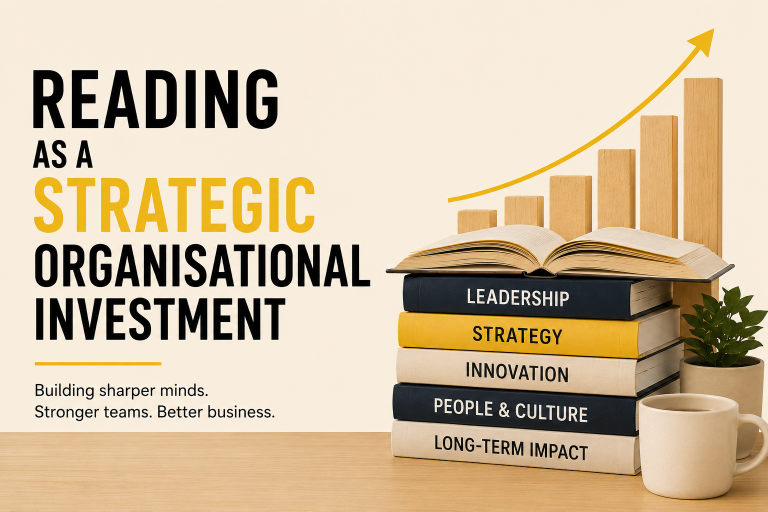
Organisations make the same bet, in bulk and with a purchase order behind it. A leadership title gets ordered for 200 managers because someone senior liked it. A shelf appears in the breakout room of the Bengaluru office, curated once and refreshed never. A budget line called books gets spent in March. In every case the company owns books, which is not the same thing as having people who read. A book nobody borrows is furniture.
What borrowing actually changes
Borrowing changes one variable, and everything downstream of it moves. Trying becomes cheap. Quitting becomes free.
A borrowed book you dislike is not a loss. It is an answer. Two chapters in you know, you send it back, the next one arrives. Do that for a year and you become a different sort of reader: wider, quicker to start, far less precious about finishing.
Then there is the return date, which does the work willpower keeps promising to do. A book that has to go back gets read. Not because anyone is enforcing anything, but because open-ended intentions lose to dates. That is not a restriction. For most people it is the only structure their reading has ever had.
The second book is where it is decided
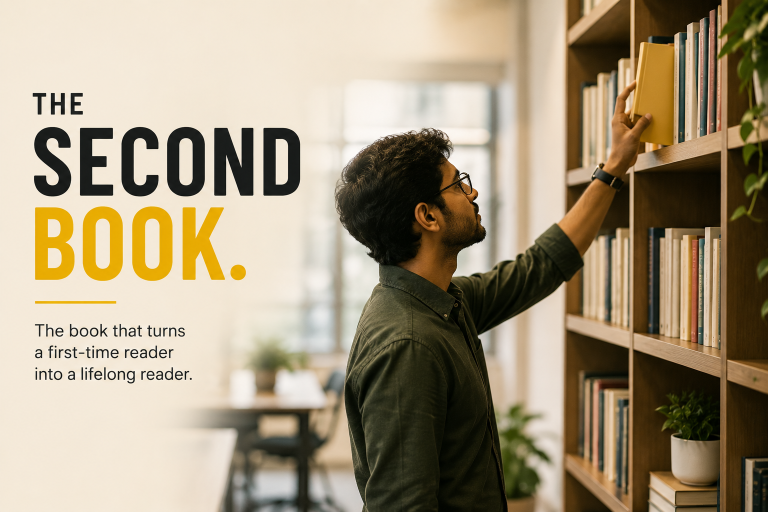
Nothing in our data shows up more clearly than this. Of the readers who borrow one book, 16% come back for another. Cross to a second and it rises to 28%. Past a third, more than half keep going.
The gap between the first book and the second is where a reading habit is won or lost. Ownership drops a purchase decision into exactly that gap. You finish something good, you feel the pull, and the next step is a shop, a search, a price and another bet on a stranger. Add enough friction and the moment passes. When the library is already at hand, the next step is just the next book.
Buy fewer books, better
None of this is an argument against buying.
Buy the ones you will argue with in the margins. Buy the ones you will reread every few years, lend out and never see again. Buy the reference you will open a hundred times and never finish once.
The difference is that you now know which ones those are, because you read them first. A borrowing habit does not replace the shelf at home. It earns it. What survives on it is a collection rather than an accumulation.
What a company should watch instead
Not what sits on the shelf. What is in motion.
Circulation is the signal: which titles leave, which come back, how far a habit travels between desks in a month. It tells you where curiosity actually lives in the organisation, and it tells you early. A purchase order tells you only that somebody approved a spend.
That is the whole difference between a company that has bought books and a company that reads.
klib is a library that runs as a service. An employee chooses from more than 50,000 titles, the book reaches their desk in a working day, they read it, they return it, they take the next one. Every part of that design serves one outcome: making the next book the easiest thing in the building to reach for.
So, borrow or buy
Both, in that order. Borrow to find out. Buy to keep.
Then look at the unread pile again. Not one of those books is a reading habit. Somewhere in the same house is a shorter stack, the ones you actually finished, and that is the only list that ever counted.
Don’t build a book collection. Build a reading culture.
klib gives your employees access to 50,000+ titles and makes borrowing, returning and discovering the next book effortless.